
01
Learning Science
What the evidence actually says.
Memory, recall, and what makes lessons stick. The research, not the folklore.
Open this pillar →Academic Method · Portfolio & Curriculum Consulting
Universities · Colleges · Specialist institutions · Training providers
The Method, on Film
A visual walkthrough of how we approach curriculum — how we audit what's there, where the structural gaps usually hide, and what it looks like to redesign a programme that changes outcomes.
The film is in production.

“A curriculum should feel like a single coherent argument — not a folder of slides.”
— From a recent university engagement
The clock
The UK eighteen-year-old population peaks around 2030. Providers outside the higher-tariff group face undergraduate income reductions above 25% after it.
Non-degree provision is the one revenue line in most institutions that is not fee-capped, not dependent on the Student Loan Company, and collected in advance. That is not a margin exercise. It carries a deadline.
HEPI Report 201, May 2026
The Sector Desk · Weekly
Policy, funding, research, practice — what moved this week, and what it means for anyone who has to teach it on Monday. Written by someone who spent fifteen years designing degrees and running faculties. Named sources, and an argument rather than a digest.
For anyone who teaches, leads or designs learning · Fridays
The Six Pillars
Six disciplines we draw from every time we design or rework a programme — not as theory, but as the working language of the engagement. Select a pillar to see how it changes the work.
Learning Science
Memory, recall, and what makes lessons stick. The research, not the folklore.
Open this pillar →
Cognitive Psychology
How the human mind processes information, builds mental models, and sustains attention.
Open this pillar →
Engagement & Attention
What other disciplines have mastered about holding human attention — applied intentionally to learning design.
Open this pillar →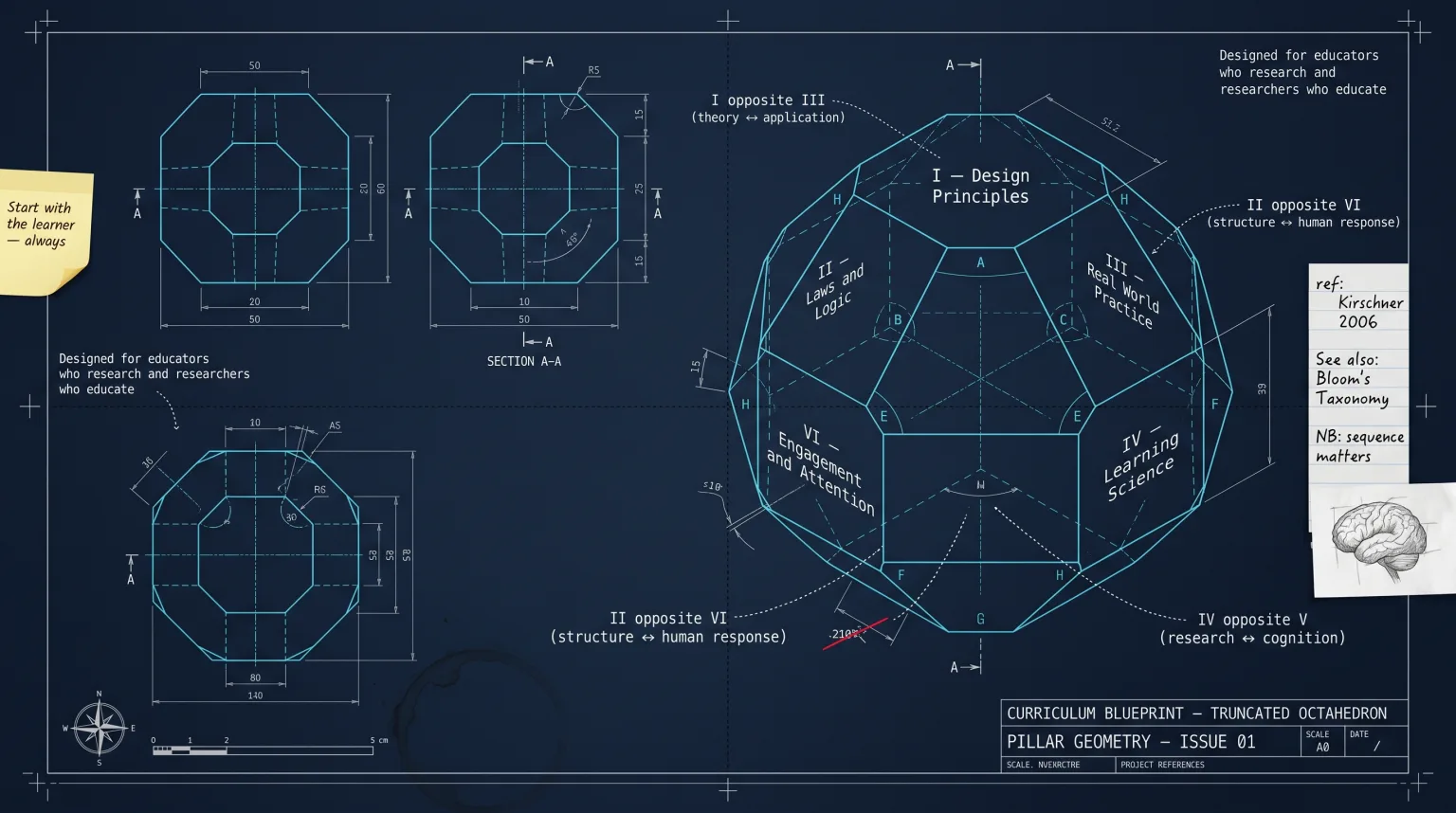
Design Principles
UX, visual hierarchy, flow. How information is presented is as important as what it says.
Open this pillar →
Laws & Logic
The principles every well-built system runs on — applied to how learning is structured.
Open this pillar →
Real-World Practice
Every principle in our method has been pressure-tested in actual delivery — at scale, under load.
Open this pillar →What we do
Our services span the full learning design and delivery lifecycle —from initial audit through to deployed platform. Select an engagement to bring its scope into focus.
01 · Portfolio
Degree portfolios, faculty design, and the non-degree layer: short courses, executive education, CPD, apprenticeships. Built from where demand is actually moving and the capacity you already own.
02 · Build
Designing and building courses and programmes for institutions and training providers.
03 · Train
Training educators, L&D teams, and creators in the Academic Method methodology.
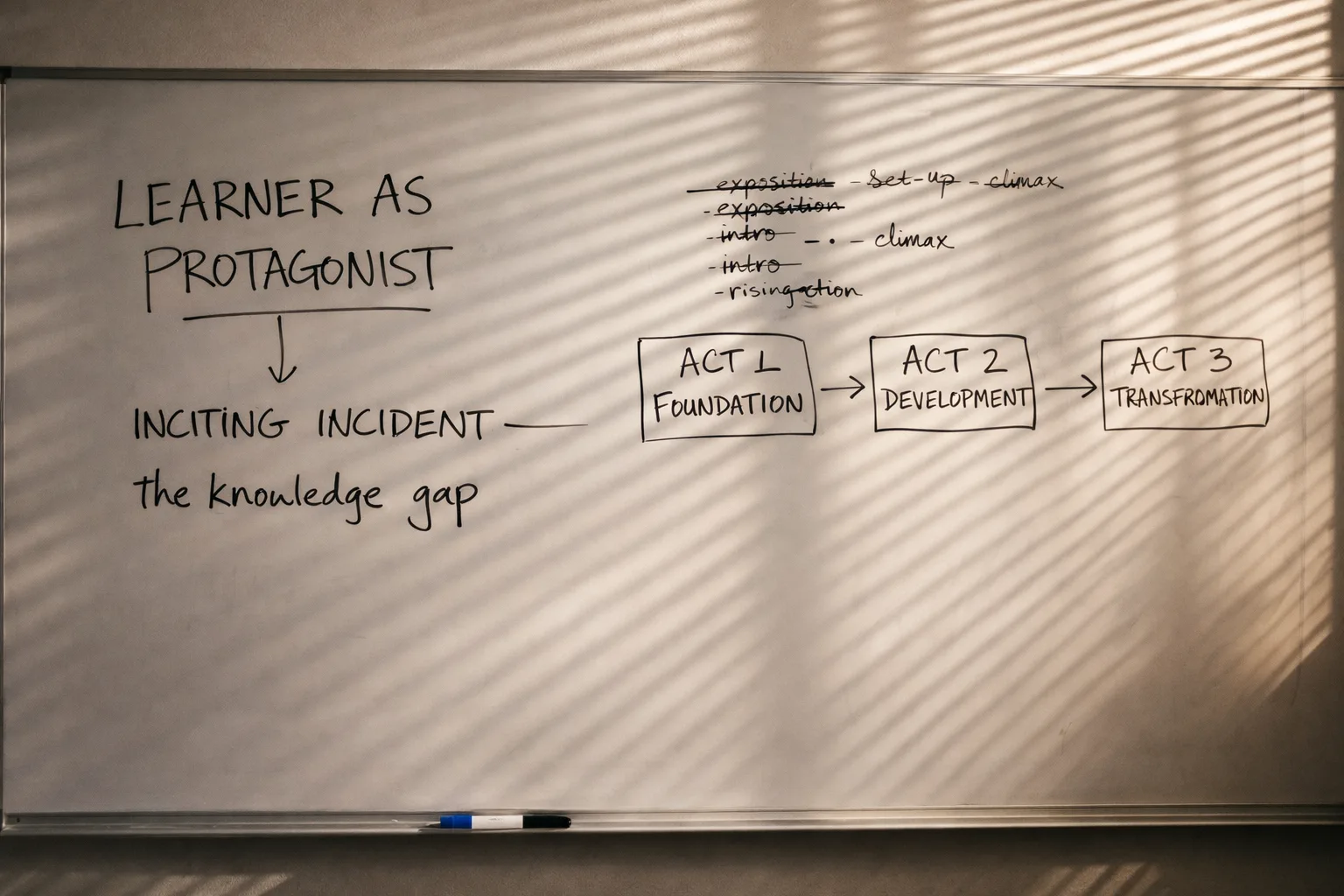
04 · Produce
Great learning design runs through every touchpoint—from how it looks to how it is delivered.
05 · Platform
Learning platforms and tools built around the programme they carry.

06 · Publish
Rigorous academic research and public-facing publications that advance the field.

“The work isn't to make learning entertaining. It's to make it remembered.”
— Working principle of the method
The shape of it
01
Forty-five minutes
Nothing written leaves the room, and if the estate cannot carry it I say so.
02
Ten working days
Where you sit, from published evidence.
03
Four to six weeks
The full outside-in read: portfolio, market, economics, the four-horizon plan.
04
Three months minimum
A retainer, to execute what the audit found.
Fees are scoped in the proposal, after the first conversation.
The Invitation
Institutions
Portfolio and revenue strategy, programme validation, transformation strategy, and the platforms to deliver it.
Book a consultationCreators & Founders · Cognition Blueprint
From brief to fully deployed learning experience — with the design rigour most courses skip. The creator side of the method lives on Cognition Blueprint.
Go to Cognition Blueprint (opens cognitionblueprint.com in a new tab)Before you enquire
If something here is not answered, put it in the form below. It goes to Kevin and gets a reply within two working days.
Four stages. A forty-five minute conversation, where you describe the problem and I tell you whether the estate can carry a solution. A Position Review, which places you against published evidence. An Opportunity Audit, the full outside-in read of portfolio, market, economics and a four-horizon plan. Then a Build, executing what the audit found. Each stage ends with a decision about whether to go further.
The first conversation is forty-five minutes. A Position Review takes ten working days. An Opportunity Audit runs four to six weeks. A Build is a retainer with a three-month minimum. How fast the whole thing moves depends on how quickly the institution can make decisions, which is usually the real constraint.
Fees are scoped in the proposal, after the first conversation. There is no price list, because reviewing the portfolio of one faculty and reviewing the portfolio of an institution are different pieces of work and pricing them the same would be dishonest to one of you. The first conversation costs nothing, and by the end of it you will know whether there is anything here worth paying for.
No. Each stage stands on its own. A Position Review is useful whether or not an Audit follows, and an Audit is useful whether or not a Build follows. The work can also focus on a single track: a non-degree revenue line, one portfolio, a group of course teams, or the delivery platform.
Kevin Fenemore. Fifteen years designing degrees, courses and faculties inside further and higher education, including four validated undergraduate degree programmes and hundreds of courses across FE, HE, CPD and industry. The work is founder-led, which is why the first conversation is with the person who will be doing it.
Universities, colleges, specialist institutions and training providers. The method holds across all of them. What changes is the scope, the governance around it, and how much of the delivery the institution wants to own.
Nothing written leaves the room. If the estate cannot carry what you are asking for, you hear that in the first conversation rather than reading it in a proposal three weeks later.
Take the Programme Design Diagnostic. Thirty questions, about ten minutes, free, and it scores your provision against the six pillars the method is built on. The research underneath the practice is published on the site in full. Neither asks for anything in return.
Consulting enquiries
Tell us what you are designing, rebuilding, or trying to change. We will respond with a direct view on where Academic Method can help.
Open the consultation formWe respond within two working days. All enquiries treated in confidence.